THE CLONING GUN™
MammoZapper™ and BactoZapper™ versions
Only $1695 Each!

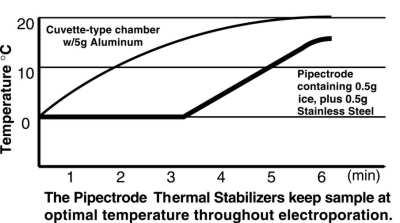
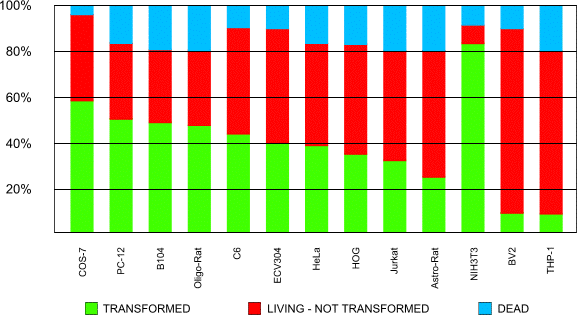
The Cloning Gun™ is a cordless, rechargeable, hand-held electroporation instrument that achieves transfection efficiencies exceeding 50% of viable cells with a variety of standard mammalian cell lines, and Transformation Efficiencies (TE's) of over 1010 transformants per µg of input DNA with E. coli bacteria. The completely portable, hand-held design makes transformation a one-step process. Just plug in one of our revolutionary disposable Pipectrode™ pipetting electrode tips to The Cloning Gun. Draw your cell/DNA mixture into the Pipectrode using the ergonomic precision thumbwheel-operated pump, pull the trigger to zap it, and eject your transformants into a flask or Petri dish - all in less than 15 seconds! Unlike other systems, our Pipectrode makes the time consuming process of transferring your cell/DNA mixture back and forth with cuvettes and pipettes obsolete.
When you compare the low cost of The Cloning Gun and its Pipectrode chambers with the cost of conventional electroporators and cuvettes, chemically competent cells, or lipofection reagents, the increased efficiency in terms of transformants per dollar is quite impressive. If you figure in time and convenience, especially in high-throughput experiments, the increased efficiency is truly remarkable. Finally, electroporation is a simple low-cost procedure for every scientist. Don't pay more for the antiquated technology offered by other manufacturers. You can use The Cloning Gun right at your own bench, or for contamination-sensitive samples, take it to the sterile hood.
To see some of our results, click here.
The MammoZapper's unique non-ionic, minimally-conductive, near isotonic electroporation medium and ultra-short pulse time increases both transfection efficiency and post-zap viability. We took the guess-work out of electrical parameters by doing the electroporation research here. The Cloning Gun voltage and time parameters have been optimized to give excellent results with mammalian cells including neurons, astrocytes, neuroglia, lymphocytes, monocytes, fibroblasts, epithelial and endothelial cells from human, mouse, rat and monkey (see photos). Just ask us if we have tried it on your favorite cells, or get a gun and see for yourself (there is a 30-day money-back guarantee on all Tritech Research products). The thumbwheel pump and Pipectrodes are so much more user friendly than cuvettes and transfer pipettes that we guarantee The Cloning Gun is the most efficient and convenient electroporator you will ever have the pleasure of discharging.
The BactoZapper version of Tritech Research's Cloning Gun revolutionizes E. coli transformation. The Cloning Gun comes factory pre-set to the optimal parameters for transformation. TE can be greater than 1010 per µg of input DNA for cells harvested in log phase. Even with standard stationary phase cells, prepared using our revolutionary, super-easy cell prep featuring our CompBooster™ Solution, overnight cultures can exceed 109per µg.